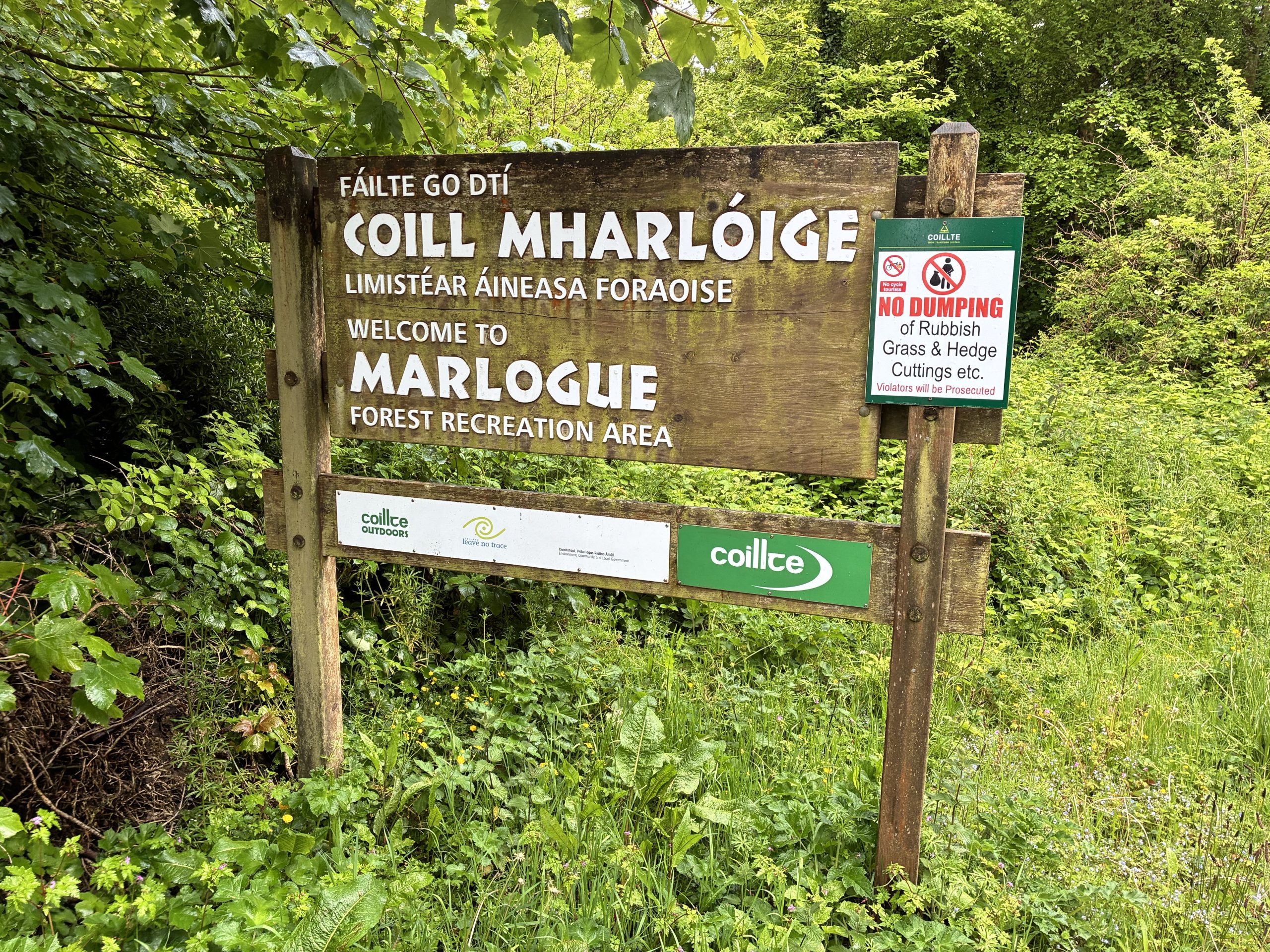
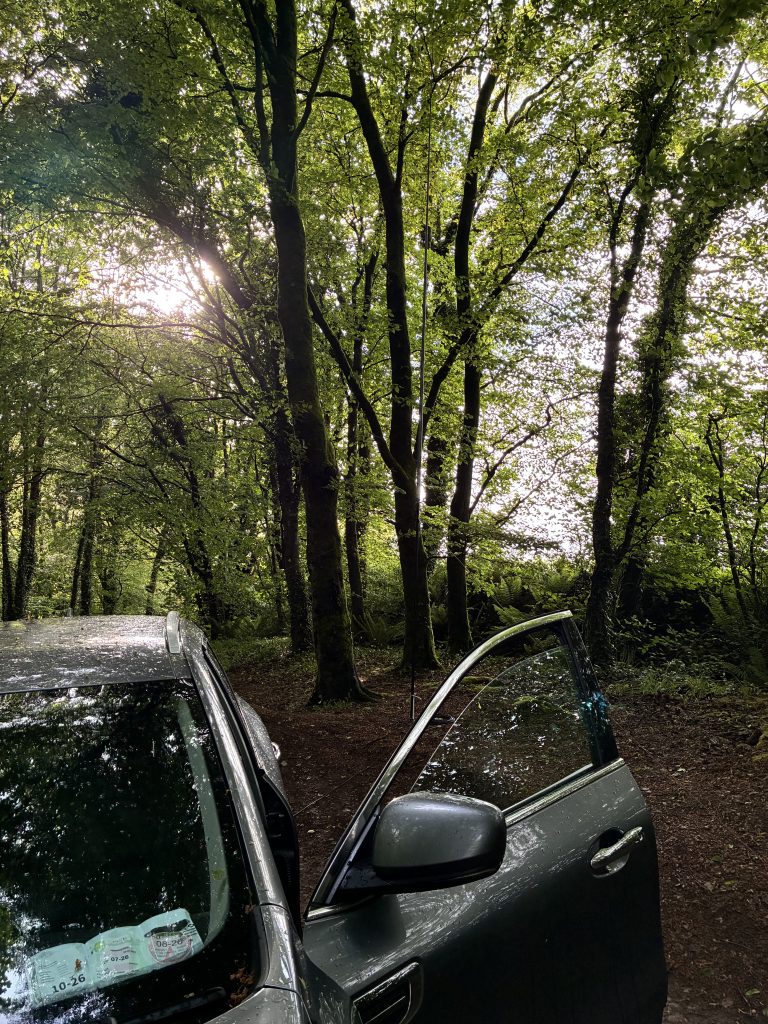
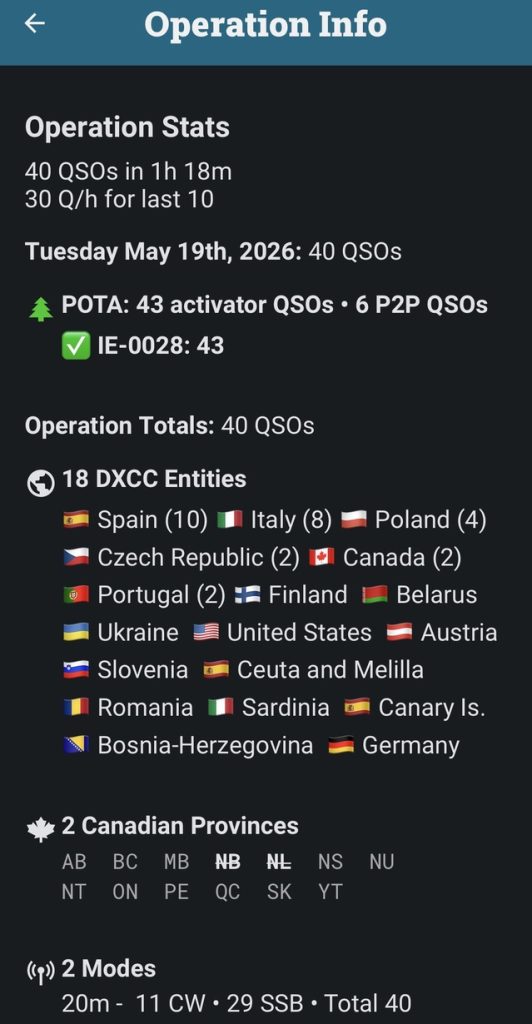
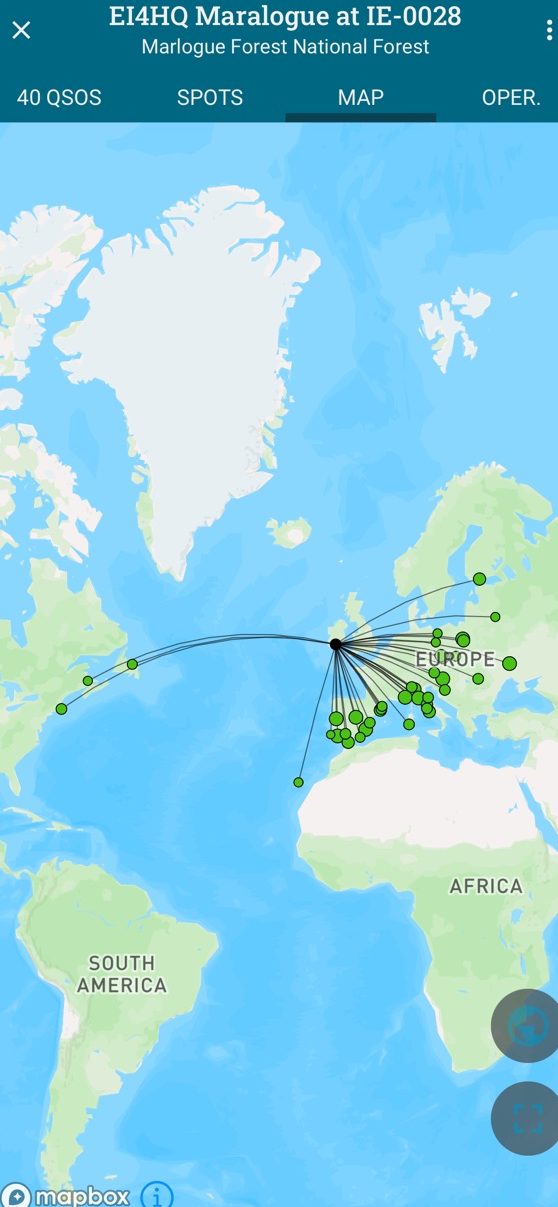
Due traffic problems, I had to defer the planned activation of IE-0256 Castlemartyr. Instead I went back to IE-0028 Maralogue Wood again and had some fun there for an hour and a half. Due wet and breezy weather, I had the place to myself for most of the time. I logged 40 contacts on 20M SSB & CW, including a few trans-Atlantic. Conditions were better than the previous weekend but were still sub-par. I’m getting used to the /T setup now, though I still need to sort out ergonomics for CW operating. I’ve also made a first attempt at adding 40M to the 20M GP antenna by turning it into an inverted L. I must test that out at base before taking it on an activation.
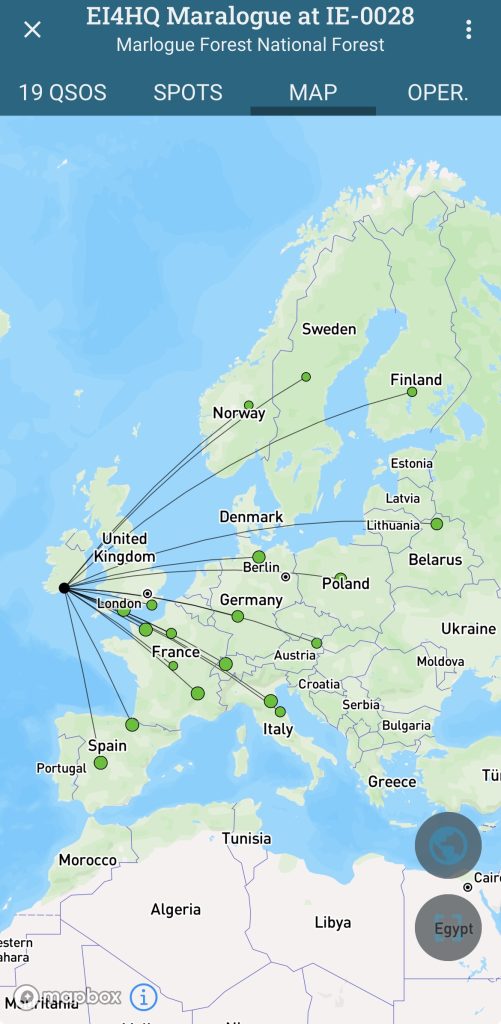
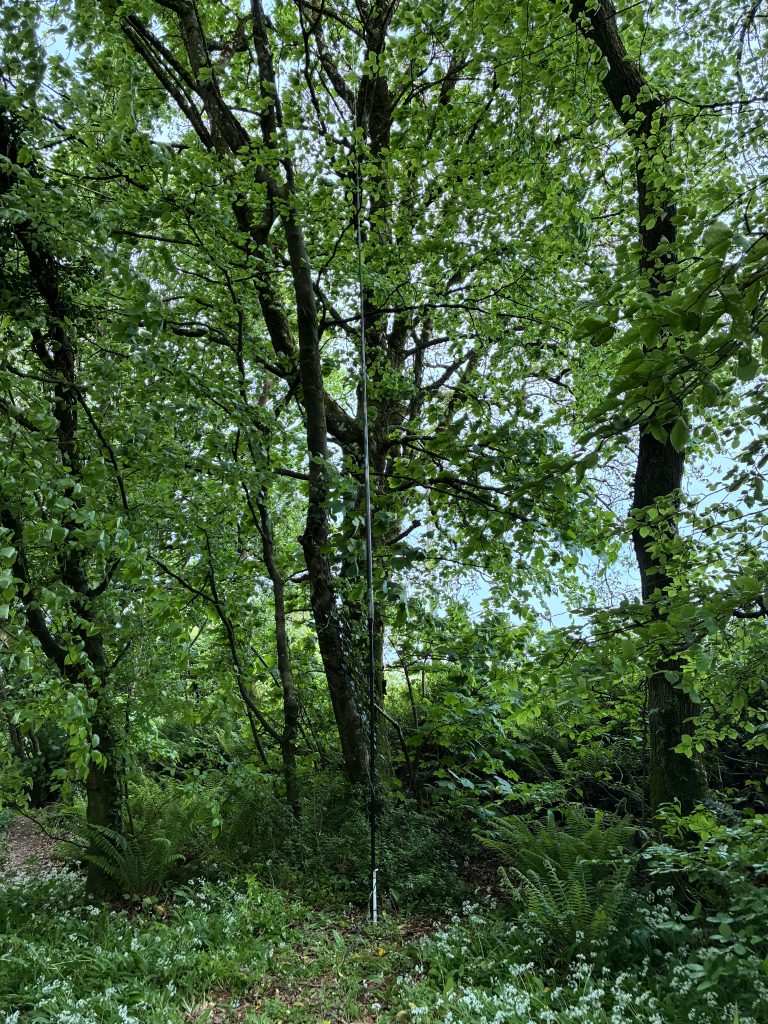
Anteanna clear of pesky, SWR upsetting branches this time. Activation SummaryQSO Map
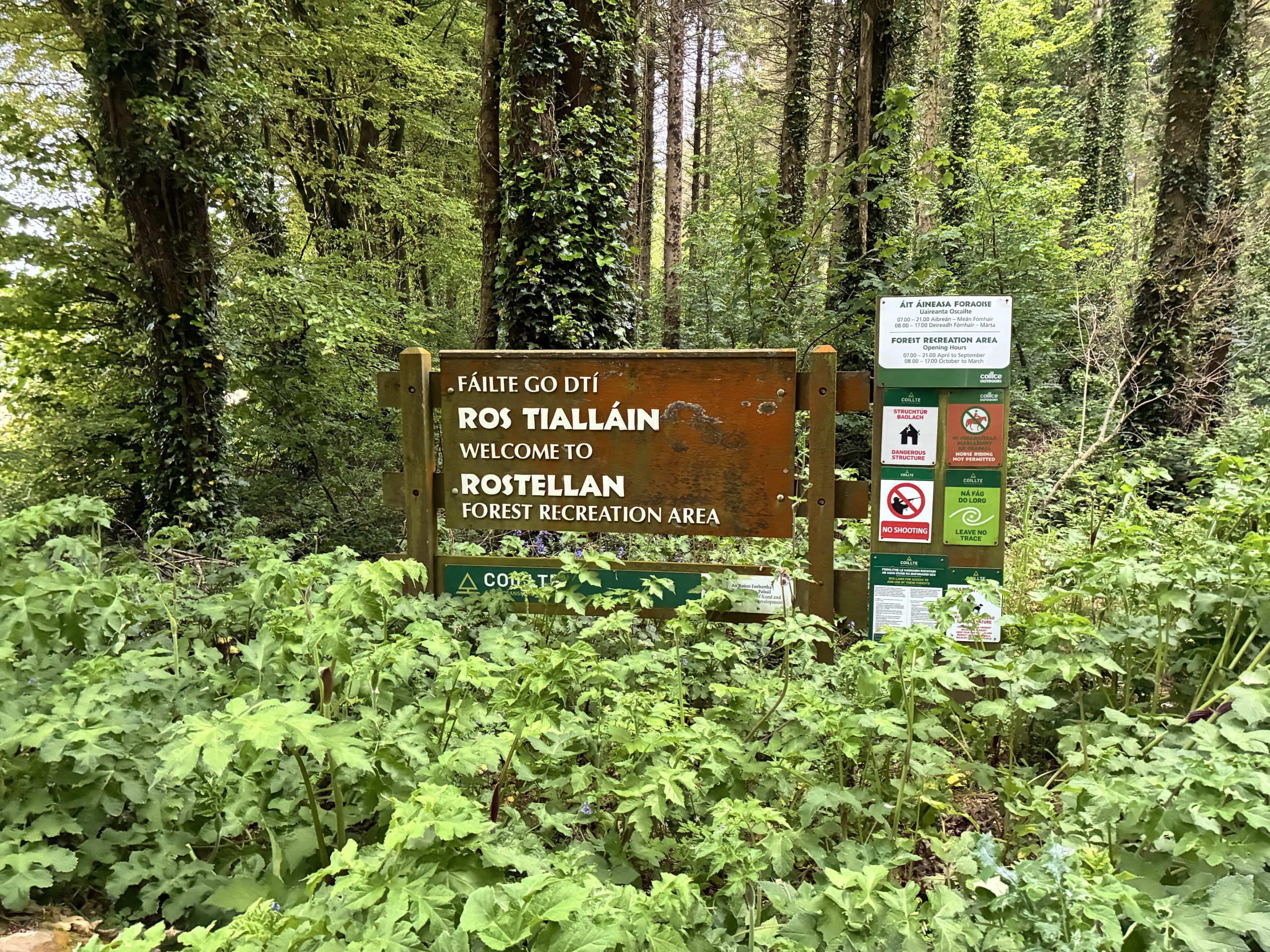
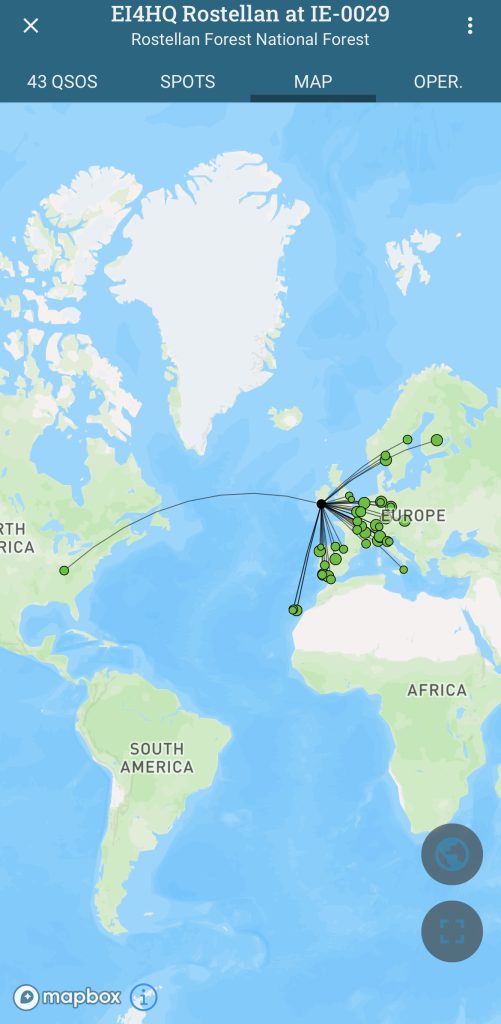
Having figured out the bigger issues on the first two “shakedown” POTA outings and also now with some sense of what a POTA activation is like, I set off to IE-0029 Rostellan woods for a longer activation. I didn’t go too far, Rostellan is about a 25 minute drive from home and due the geography of Cork Harbour, as the crow flies it’s actually only about 3km from my home QTH.
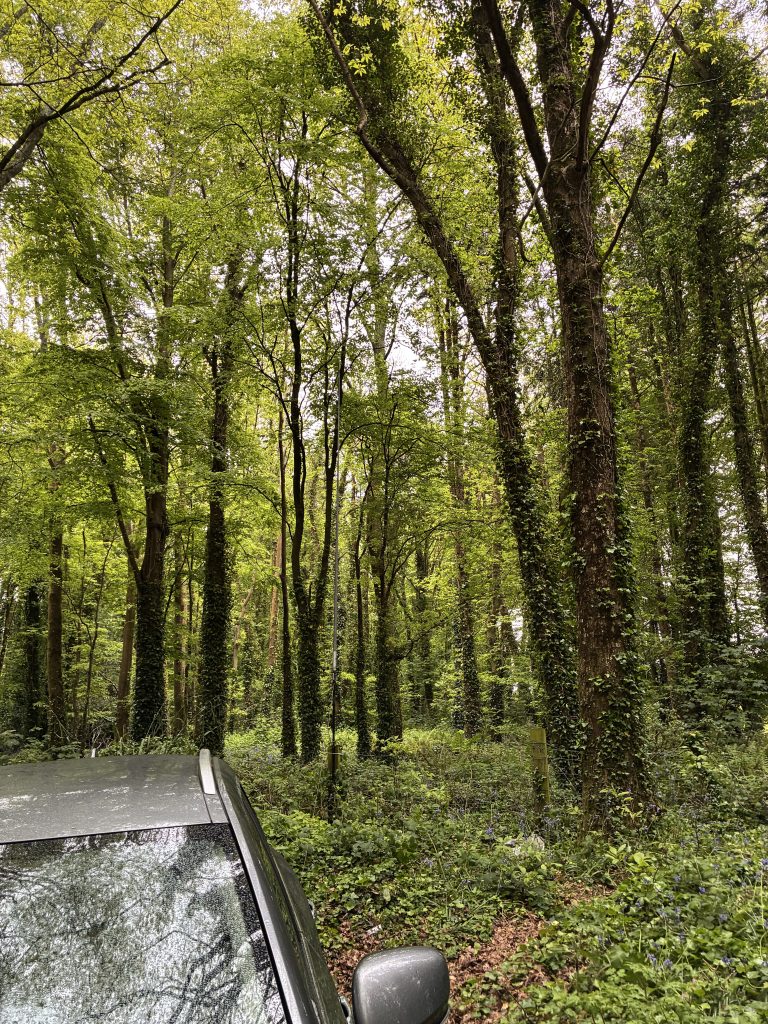
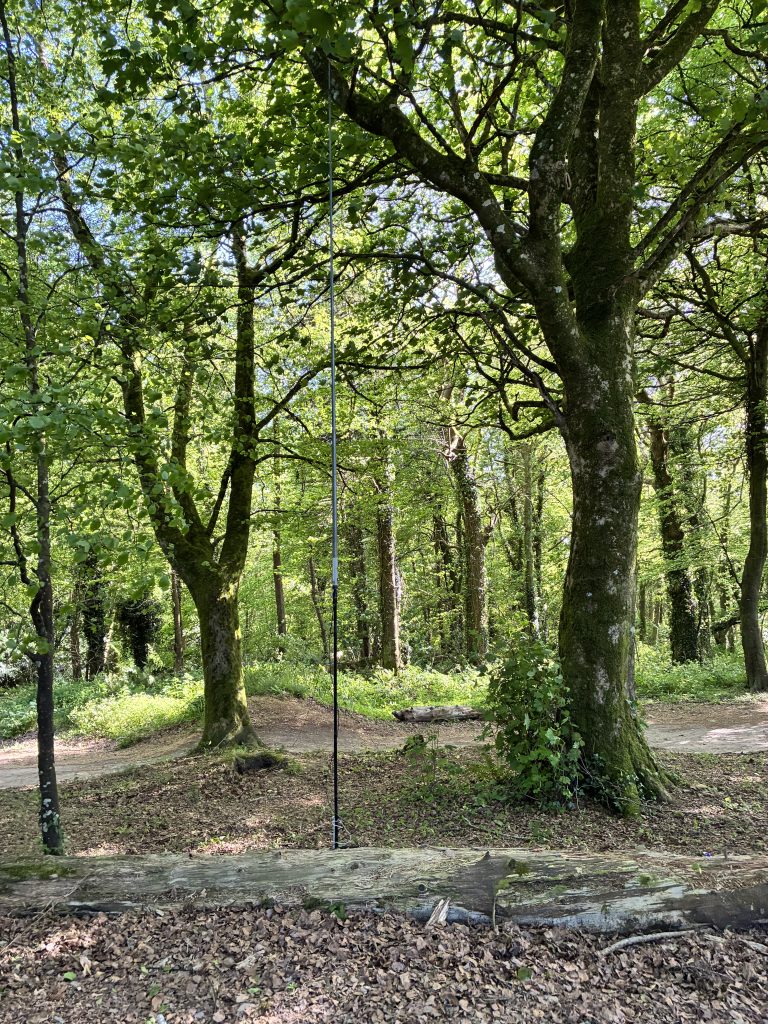
Spot the antenna!
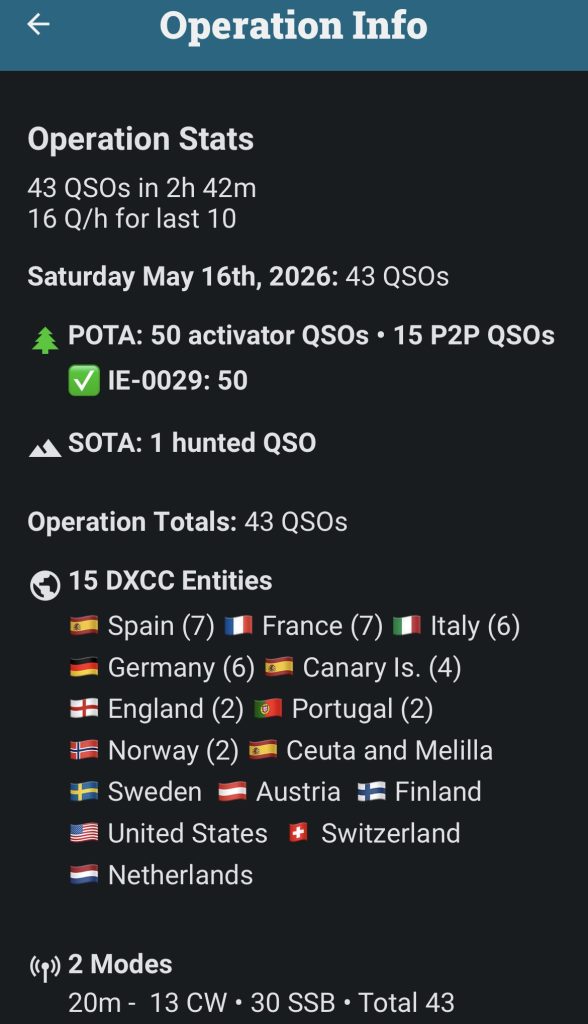
Murphy’s Law was in full operation as the activation coincided with very poor propagation conditions. Nonetheless, I stuck at it for just over two and a half hours. A big thanks to everyone who took the patience to work me to give me 43 QSOs (50 POTA contacts) across 20M SSB and, for the first time CW. I had some technical issues with CW, a combination of the first time I’ve used a new keyer (yes, I did have the manual with me but misunderstood something it said) and an RFI issue, where my first CW transmissions resulted in the boot (trunk) of my car opening all on its own! All in all, good fun though and proof that even when conditions are poor, you’ll work stations with a bit of persistence.
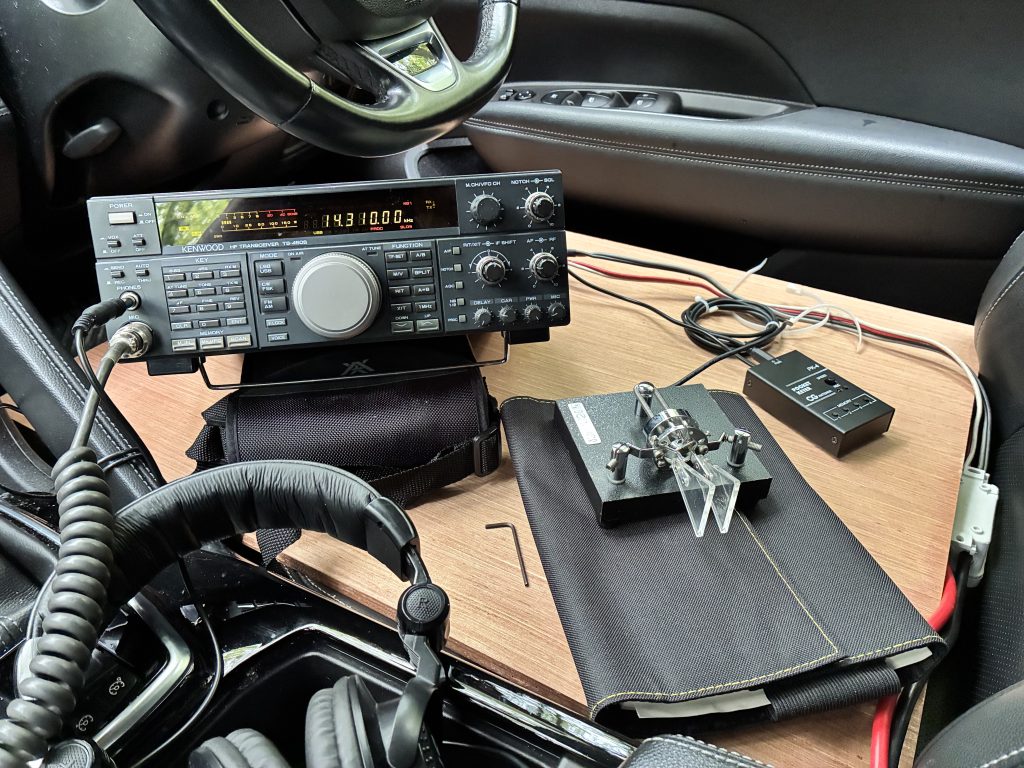
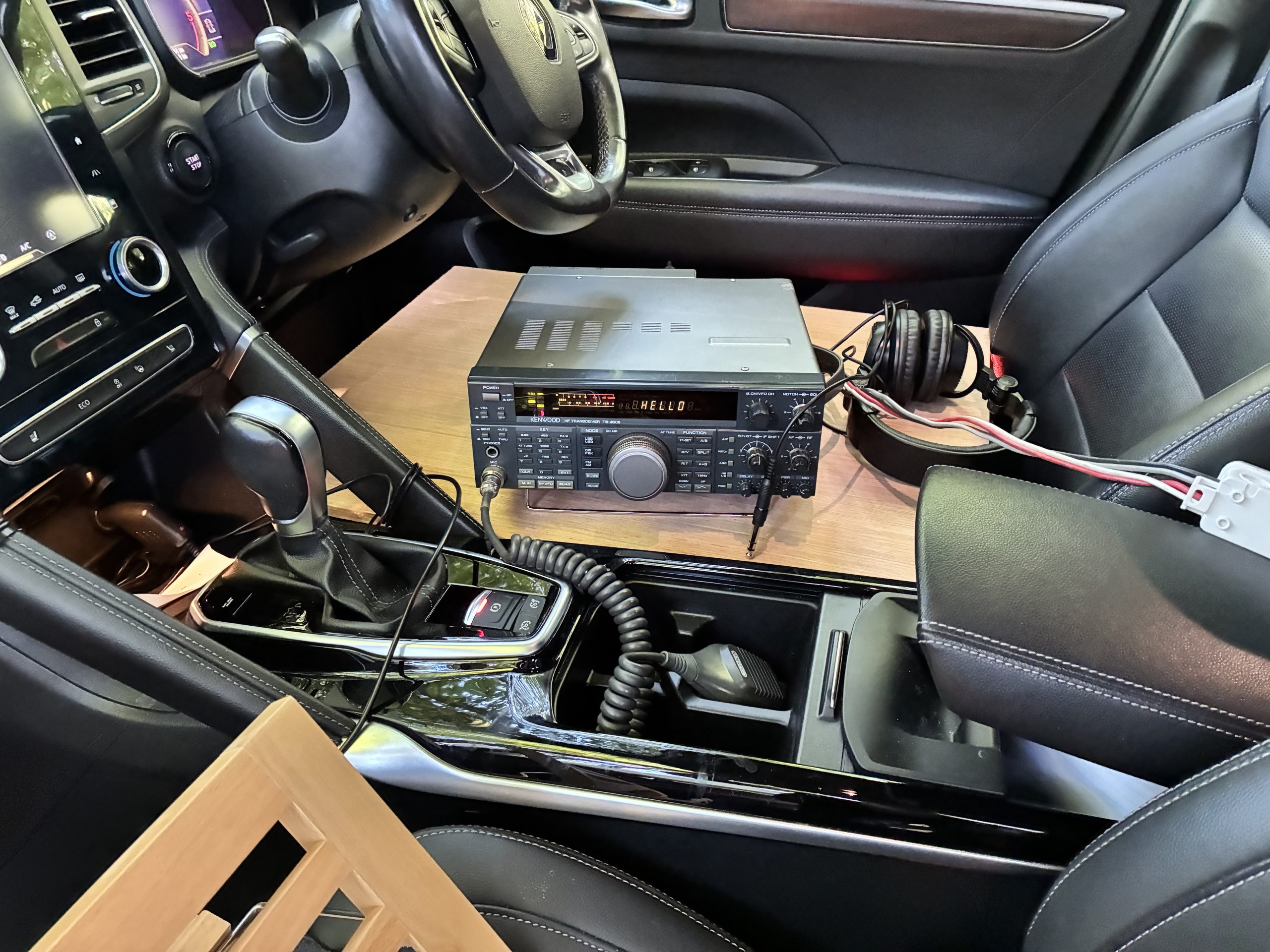
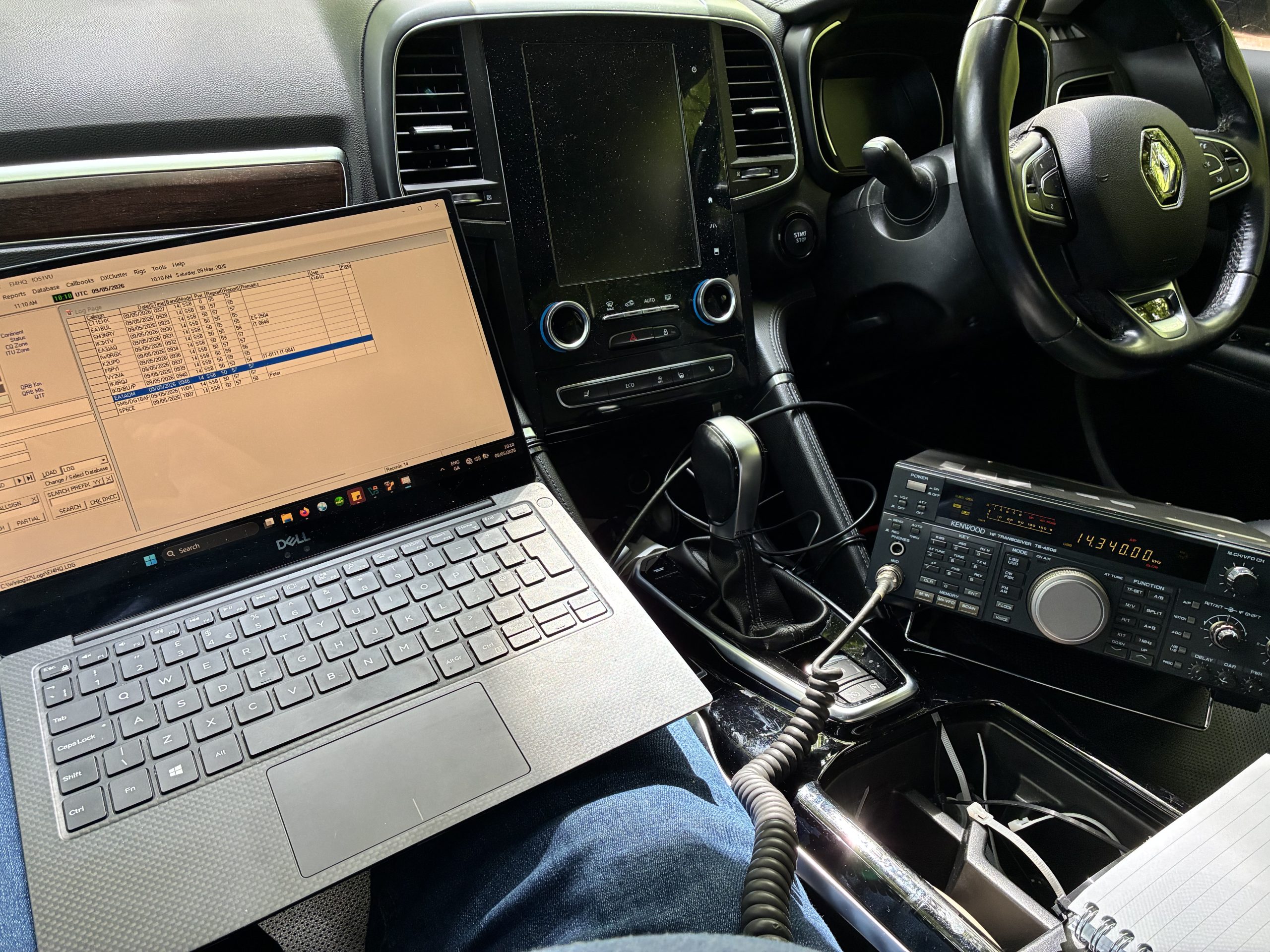
My initial attempt at CW operating “/T”. The ergonomics need a bit of work.Activation SummaryQSO Map
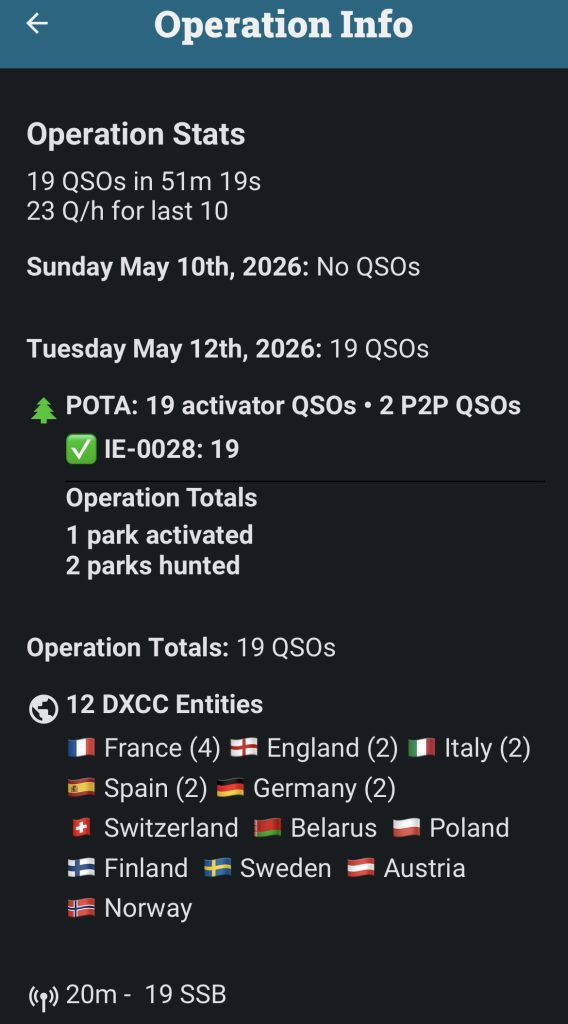
My second cut at a POTA activation, with a few enhancements from the first outing. Again, I went to my local woodland, Maralogue IE-0028. Having learned from the first experience, I put my antenna somewhere where the vertical element (uninsulated) wasn’t touching off tree branches all the time. That had played merry hell with the SWR on the last outing! The biggest change I made was the move to Ham2K’s Portable Logger PoLo for logging. What a find (thanks to my radio buddy Vic for the pointer). If you’re interested in POTA or SOTA, or even /P operating more generally, then PoLo is well worth a look, it’s a very well thought through and executed app.
Antenna mounted well clear of trees this time around.
I stuck with 20M SSB again on this activation and honour was served with a QSO total of 19, one higher than the first outing.
My first POTA activation, the mission simply to shake down and test out the new “/T” setup. That setup is intended to be used at locations I can access by car. It’s built around my recently renovated Kenwood TS450SAT (33 years old now), with a 90Ah battery for power, and my proven 20M elevated GP antenna, that’s made from an old ship’s lifeboat radio. On the whole, this first activation at my local woodland went well. I’ve still got a few wrinkles to sort out, particularly logging. Nice to get the first activation under my belt and a respectable 18 QSOs in the log, all on 20M SSB. I’m already looking forward to the next outing.
Stealthy in amongst the trees but branches kept touching the antenna and upsetting the SWR!
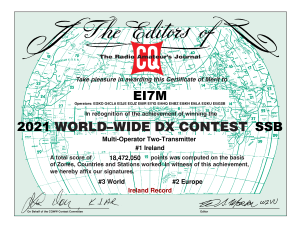
Addendum: In the multi-op 2 category, EI7M placed 3rd in the World and 2nd in Europe after our Estonian friends ES9C. PJ4K (Bonaire) took the 1st place honours. We also set a new Irish record.
For the first time since the pandemic hit, over the weekend of 30th – 31st October EI7M got together to put in a multi-2 effort in the CQWW SSB contest. It was fantastic to get the team back together again. I was a little rusty at the start but quickly got back into the stride of it. I did three 8 hour shifts over the weekend, starting with the kick-off from 00z to 08z on the Saturday, 16z to 00z on the Saturday and then 08z to 16z on the Sunday.
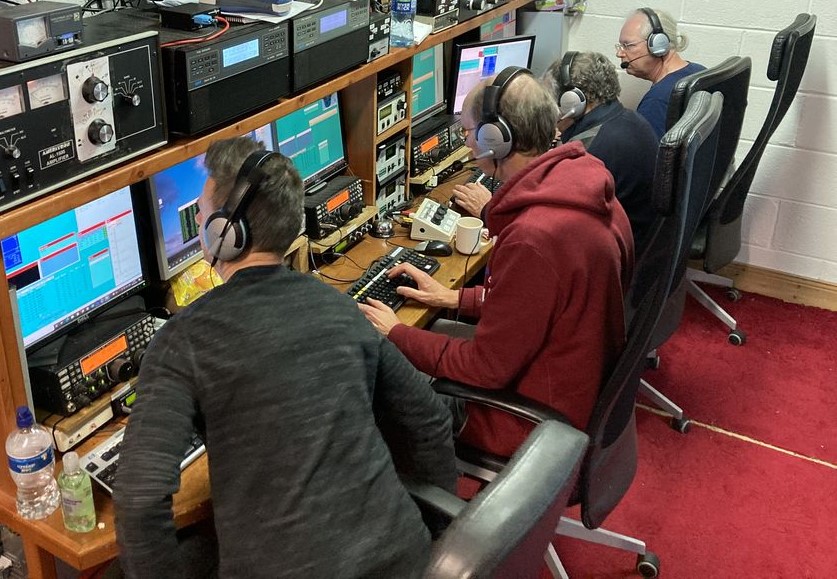
Some of EI7M shift 2 hard at it. L-R; Rafal EI6LA , Pete G4CLA, Dave EI4BZ and Mark EI3KD.
Conditions seemed pretty OK on the whole but there was a solar flare overnight on the Saturday into Sunday, that made conditions difficult for the crew on that shift. The weather also turned both very cold and very windy on Saturday evening but that’s Ireland in November. We’re aiming for #1 in Europe and we put in an effort that appears to have us in with a shout at this stage. Let’s see what happens.
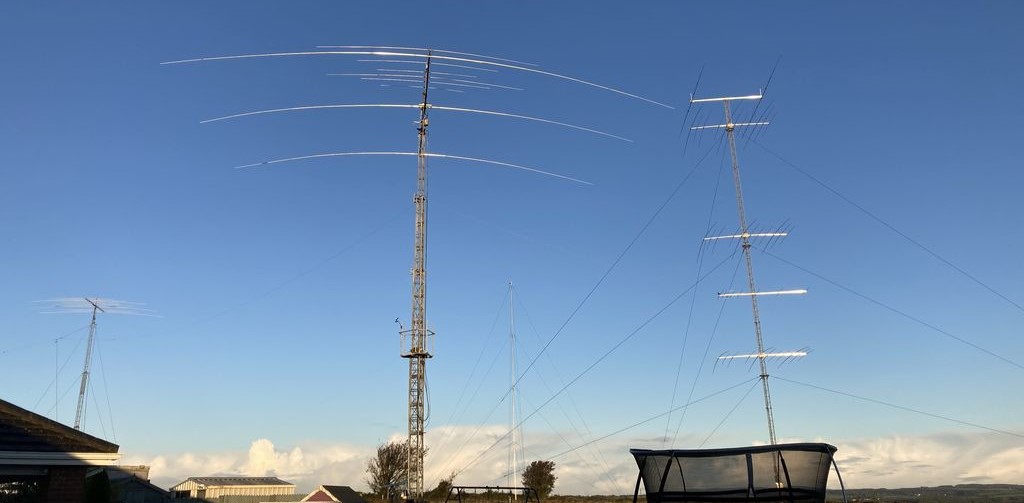
Some of the antenna farm at EI7M on the Saturday, before the weather deteriorated.
The crew for this contest were Ralf EI2KU, Neil EI3JE (station manager), Dan EI3JZ, Mark EI3KD, Dave EI4BZ, Cormac EI4HQ, Pete G4CLA, Denis EI5GSB, Rafal EI6LA, John EI7IG, John EI8IR (station owner) and Roger EI8KN.
The official NAVTEX Manual produced by the Swedish Maritime Administration on behalf of the Radiocommunications sub-committee of the International Maritime Organisation, introduces NAVTEX (NAVigational TEleX) as “…an international automated direct-printing service for promulgation of Maritime Safety Information (MSI), navigational and meteorological warnings, meteorological forecasts and other urgent safety-related messages to ships. It was developed to provide a low-cost, simple and automated means of receiving MSI on board ships at sea in coastal waters. The information transmitted may be relevant to all sizes and types of vessel and the selective message-rejection feature ensures that mariners can receive MSI broadcasts which are tailored to their particular needs.“.
NAVTEX DXing is the reception of these MW NAVTEX broadcasts from all over the World. In general, it’s no different to any other DXing activity – searching out far away stations using an appropriately designed and built station, supported by other DXers who provide great DXing tools & advice, and all the while riding the unpredictable propagation waves as you do so. However, chasing NAVTEX DX has two additional (and rather challening or frustrating depending on your point of view) complications that make it quite a bit different in practice.
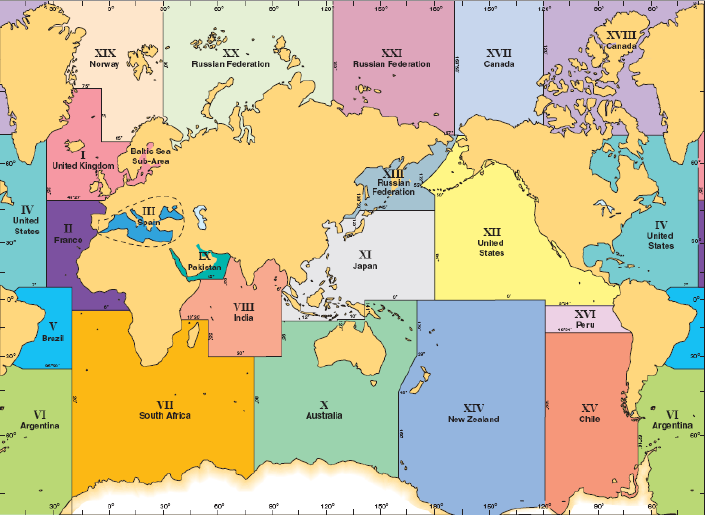
The 21 NAVTEX Navareas Worldwide. EI4HQ is located in Navarea 1.
NAVTEX stations Worldwide are organised into 21 geographical areas called “Navareas”. The system employs a global transmission schedule such that one station from each Navarea transmits in each schedule slot. All NAVTEX stations transmit on precisely the same frequency of 518KHz. A separate related network intended for local and regional use operates on 490KHz.
In each time slot there are therefore up to 21 NAVTEX stations transmitting Worldwide on precisely the same frequency and at the same time. You might well ask “Won’t nearby or stronger stations just blot out any weaker stations further away?” Yes they do, and that’s in large part why NAVTEX DXing is so much of a challenge.
The NAVTEX Manual provides a detailed and comprehensive description of the global NAVTEX service. Here I’m only going to talk about the radio and DX reception aspects.
That NAVTEX DXing is possible at all is because of the vagaries of MW propagation. Variations in radio signal paths cause local stations to sometimes be received quite poorly and DX stations sometimes to be received quite well. A key to succcessful NAVTEX DXing is to be listening when these two phenomena coincide. The subject of propagation at MW frequencies is a life’s work in itself. In due course, I’ll write a bit about that subject as it’s a fascinating one but for now, you can get a sense of it here.
Critical to NAVTEX DXing success is a very good MW receiving station. How to build a capable MW receiving station is a topic that would take quite some time to even summarise. I intend writing about that subject in due course but for now I include a number of useful tips later in this article that should help anyone starting out. Also important for NAVTEX DX success is your geographical location relative to the locations of the NAVTEX stations. Unfortunately, that’s not something most of us have any control over most of the time. The MW noise environment as heard by your receiver also plays a big role. To top all that, persistence is needed.
All serious NAVTEX DXers monitor the NAVTEX frequencies all night, every night and all year around as the right conditions only occur occasionally and so the DX only makes it through occasionally. When it does however, it brings a great feeling of achievement with it, every time!
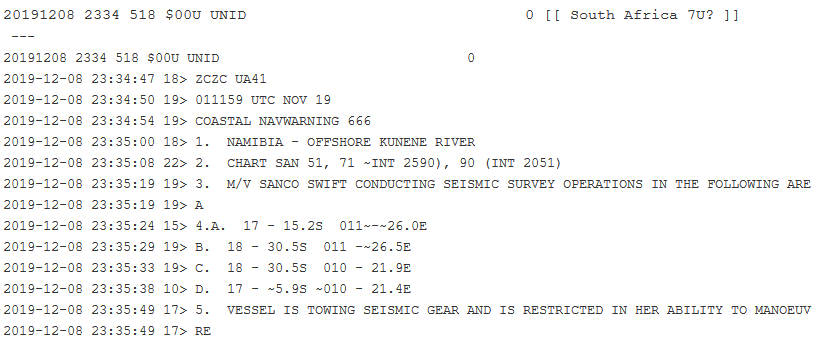
A NAVTEX message from station $07U Cape Columbine, South Africa received at EI4HQ, a distance of 9765km.
The elements of a Navtex receiving system are as follows:
An effective antenna for MW frequencies
A sensitive, selective SSB receiver covering the 490-518KHz frequency range
An audio feed from that receiver to your PC
Navtex decoding and logging software
In my case, my setup is as follows:
A homebrew, SMD based PA0RDT mini-whip active receive antenna.
I feed the audio from the SDR software to the Navtex decoding and logging software using virtual audio cable software.
The excellent YAND (Yet Another Navtex Decoder) Navtex decoding and logging software by Dirk Claessens The latest software is available on the NavtexDX list.
Over the last two years I’ve done quite a bit of Navtex DXing and tried a number of different setups e.g. using an inverted L for 80/160M, a K9AY or a mini-whip as antenna, and a Yaesu FT2000, SDR Play or Airspy HF+ as receiver. The current system as summarised above has been the best performer by far. The FT2000 isn’t bad on MW, the SDRPlay is poor as it suffers from significant overload from the adjacent MW broadcast band. The inverted L is a good antenna for Navtex though a bit noisy. The mini-whip is a very special antenna that works extremely well on VLF, LF, MW and MF frequencies in particular. It’s become a firm favourite of mine due consistent high performance for VLF/LF, Navtex and NDB dxing.
I won’t say much about the YAND decoding and logging sofware other than it’s very effective, easy to use and does everything a serious Navtex DXer needs. In terms of logging and reporting, YAND makes the logging piece a breeze and Navtex DXers post daily reports on the NavtexDX list. I recommend you join that list as it’s where the collective knowledge resides and the members of the group are a great bunch of very helpful and extremely knowledgeable people.
As I’ve outlined in another piece on NDB DXing, a good MW frequency receiving station is a life’s work in itself. If you want to have a capable Navtex DX station then you’ll need to put the effort into achieving a performing MW receive system. After that it’s persistence and patience…
Having decided to completely revamp the shack, one of the first questions to arise was what antennas am I going to put up? I’ve been using a 3 element tribander for 10, 15 and 20 metres mounted on my specially reinforced chimney, and variants of wire verticals on the lower bands. You can see details of the antennas I’ve had on the station page. Most antennas I’ve used up to now have performed reasonably well from a radio perspective but durability has been a problem.
Decisions for the low bands i.e. 160, 80, 40 and 30 metres weren’t hard to make. I’m going to build an updated version of my successful and proven inverted L for 80 and 160 metres so it includes 40 and 30 metres as well. The 80 and 160 metre version has performed very well and adding 40 metres is an easy option to keep me on that band; 40 metres isn’t a huge priority band for me over the next while as I’ve my highest DXCC country total on that band and will be concentrating elsewhere for the foreseeable future. I’ve never really been active on 30 metres up to now, so any half decent antenna will do at this stage. If past vertical performance at this site is anything to go by, it’ll be a decent performer on 30m. For receive on the lower HF frequencies I’ve a very trustworthy K9AY that I am certainly going to keep, though it needs reconditioning. I also have a partially constructed N/S bi-directional beverage for 80 metres that I will finish and I’ll be installing another at more or less 90 degrees to the first. I’m very fortunate to have both the space to install such an array and accommodating neighbours who will permit me to do so.
These criteria were ordered based on the specific needs I have. Others will of course have different needs and different constraints and priorities but this is how design goals fell out for me on this occasion. I want a station that will stay on air in the worst Winter storms we get, that won’t require a huge amount of time or money to maintain, that has a relatively low visual profile, that performs reasonably and doesn’t cost me a fortune. Many hams will be surprised that performance is only 3rd on the list.
It came down to a simple choice for me – do I want more time on the air with a less efficient antenna or better performance with more enforced periods off air. I’ve never spent enough time on the air and want to change that, so the durability and longevity goals won out over on-air performance.
The challenge was what to do for the higher bands i.e. 20 through 6 metres? I wanted a change from the tribander partly because I live in a very exposed spot that is open to storms from the North Atlantic in the Winter; the highest wind speed recorded since I’ve lived here (2000) is 75 knots (139kph/86mph). Although thankfully I’ve never had a serious failure on the tribander, just a few element tips coming off now and again, I tend not to sleep that well when the storms go through. The tribander is also getting to end of life and I just thought it’d be nice to hear the radio World through different ears for the next while. Though I’ve led something of a charmed existence with the tribander, looking back over the last decade I’ve realised that durable antennas have been a real challenge – I’ve had lots of other antennas fail over the years – and consequently I’ve spent alot of time and effort keeping wire and aluminium in the air due equipment failures. My tribander rotator also died earlier this year and that, along with the remains of many past antennas I came across when cleaning out my shed over the Summer got me thinking about design criteria for my new antenna farm. After some mulling over, I came up with the following:
Durability (maximise survivability)
Longevity (minimise maintenance)
Performance (reasonable efficiency and directionality)
Visibility (low visual profile)
Cost (keep it some way reasonable)
Criteria established and site surveyed, it was time to ask the tough question; what antenna(s) for each band from 20 metres to 10 metres? I dug out my old reliable favourite antenna book, the ARRL Antenna Book and did some revision. I also spent along time online looking at various options. I thought about my site and my priorities. I read extensively. I slept on it for many weeks. I did alot of doodling. I walked the land over and over again. I got a crick in my neck looking upwards to my various antenna supports – my tall house and various trees around my site. I considered and reconsidered various configurations. A possible solution emerged after a number of weeks and many possibilities had been considered and rejected. From that point on, while other possible configurations bubbled up, I kept coming back to that particular configuration. In the end, I couldn’t escape a conclusion that was staring me in the face.
The antenna arrangement that would best fit my situation was a suite of dipoles for 6 through 20 metres, consisting of a pair of dipoles one half wavelength high for each band, erected at right angles to one another and each antenna fed independently to maximise flexibility; I could feed either antenna on a particular band independently or together, in effect giving me two or four beam directions. The setup, if done right would be very durable, require little maintenance, perform well, wouldn’t be terribly visible if done right and wouldn’t cost that much either. An added bonus is I’d have 100% redundancy on each band so if I did have an antenna failure I wouldn’t end up off air as a result on the affected band.
The focus since making that decision has been on engineering the most durable, lowest maintenance, least visible solution I can come up with. I’ve put quite a bit of work into identifying antenna parts such as pullies, mounting points for the house and trees, suitable guy line, antenna wire, dipole centres, toroids for the 1:1 current baluns at the feed points and coax cable. You can read about the dipoles antenna I’m building at the projects page. There’s something very satisfying about ending up with such a ubiquitous antenna as being the appropriate solution. At this stage of my radio journey, it feels right to be going back to basics so to speak. The resulting station if hooked up to a 100w transmitter will constitute something of a standard candle station on-air as well, a nice bonus. It’s good to have reference points out there, part of the reason I monitor the NCDXF beacons so closely.